What You Will Learn
With the growing need for 3D computer animation worldwide, CCM offers student artists a chance to take their first steps towards a career creating visual effects. This program provides students with the creative and technical skills to seamlessly transfer to the best animation schools in the country and the foundation to work in the animation industry.
CCM student artists learn to create animated visual effects in television, the Internet, video games and films. There is also a growing need for animators in medical animation, architecture visualization, mechanical animation, forensic animation and animation in education.
Curriculum
The CCM animation program enables you to build your fine art skills with a 37-credit core focusing on an array of drawing courses, 2D and 3D design, computer for fine art, color theory, multimedia, media aesthetics, animation, and a final portfolio presentation course to assemble and finalize your artistic portfolio.
Careers in the Field
A degree in Animation will prepare you for the following careers:
Associate Degree
- Animator
- Game Artist
- Illustrator
- Production Designer for Film/Theatre/Television
- Stop Motion Animator
Bachelor’s Degree & More:
- Art Director
- Game Developer
- Storyboard Artist
- VFX Artist
Where You Can Go
The Associate of Fine Arts (AFA) degree in Animation at CCM is designed to provide a strong foundation for students to start their careers or transfer, upon graduation, to an accredited four-year college, university, art institute or specialized school of art and design that offers animation programs.
The following schools offer bachelor degree programs in animation or media studies:
- California College of the Arts
- Carnegie Mellon University
- Drew University
- Fairleigh Dickinson University
- Full Sail University
- Jersey City State University
- Kean University
- Laguna College of Art and Design
- Montclair State University
- New Jersey Institute of Technology
- New York University, Tisch School of Arts
- Ramapo College
- Rhode Island School of Design
- Rider University
- Ringling College of Art and Design
- Rochester Institute of Technology
- Savannah College of Art and Design
- The Art Institute of Boston
- The College of New Jersey
- The Columbia College of Chicago
- The Maryland Institute College of Art in Baltimore
- The Pratt Institute of New York
- The School of Visual Arts NYC
- The University of Central Florida
- The University of Pennsylvania
- University of California Los Angeles
- University of Southern California
- William Paterson University
Why Study Animation at CCM?
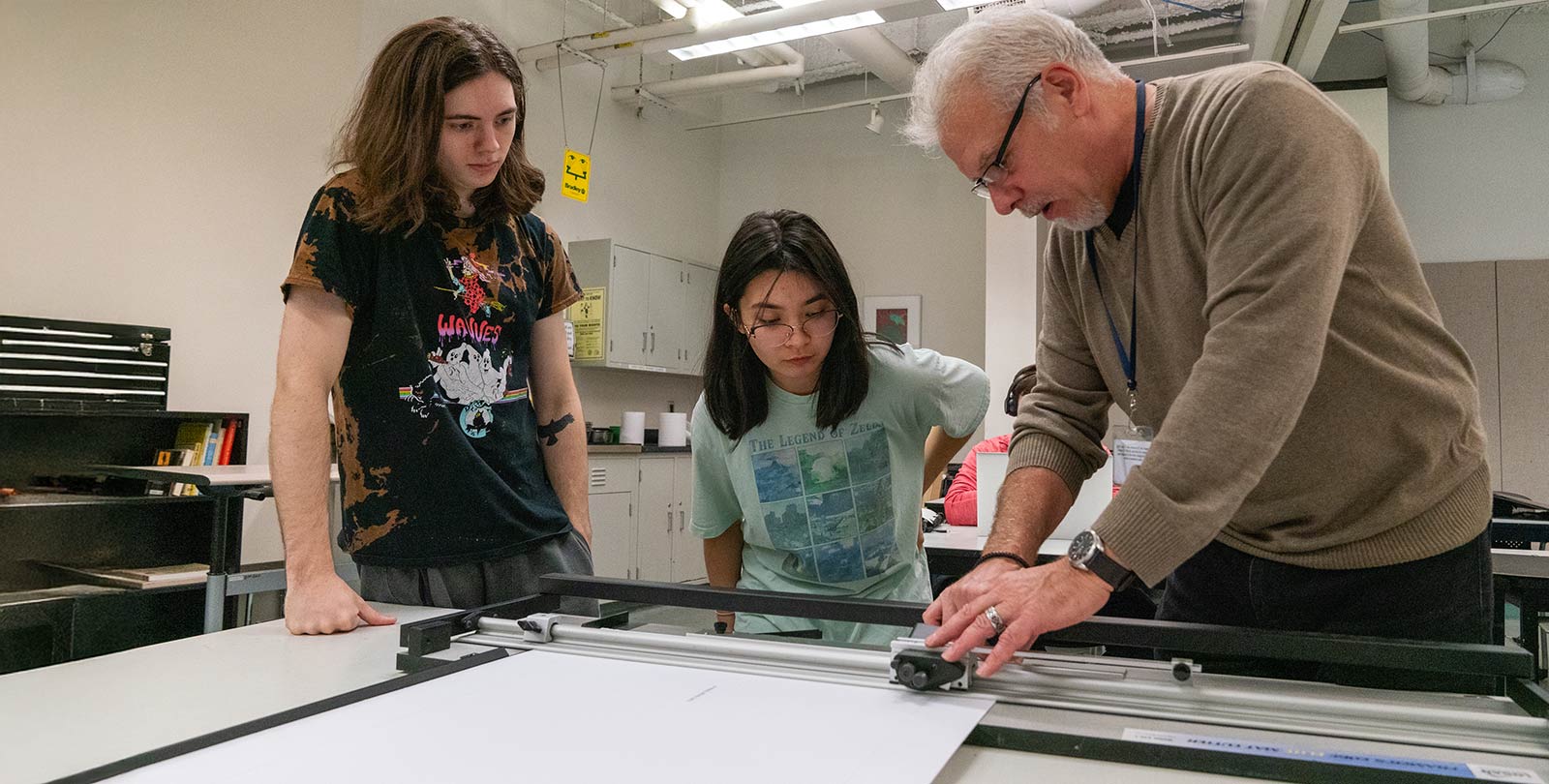
CCM faculty brings knowledge and experience in multiple disciplines. Students learn drawing techniques, figure drawing, basic design and storyboarding, as well as professional animation software. With the use of professional software housed in high-tech studios in the interdisciplinary studio environment of Emeriti Hall, and a comprehensive portfolio and resume building process, students gain the experience needed to begin their career and/or transfer to a highly ranked animation school.
Credit, non-credit internship experiences and job search support are facilitated through our Office of Career and Transfer Services, where you can also learn how to build a resume, and receive the tools to help you with interviewing skills to succeed! Learn more about Career Services here.
Paying For Your Animation Education
Earning an associate degree in animation is a powerful investment that will pay off over the course of your life, in both increased earnings and job satisfaction. But what is the upfront cost, and how do you afford it?
There’s good news: Money is available to help you pay for school! Our Financial Aid staff can provide lots of information about the process of finding funds to help pay for your education.
Featured Courses
Drawing I & II
Learn the methods, materials and visual information needed to draw what you see. In the studio faculty lead you through a series of simple exercises designed to build competence and confidence to eventually complete a sketch book and a portfolio of still life drawings, landscape drawings, perspective drawings and portraiture using pencil, charcoal, conte crayon and ink. Drawing II also includes a study of basic anatomy for artists and an introduction to drawing from live nude models, both male and female.
Three-Dimensional Design
Through lectures, multimedia presentations and assigned projects, you can use a variety of materials along with planning, sketching and modeling, to learn to understand and control the visual and physical forces inherent in the creation of three-dimensional objects. Complete the class with additional portfolio work and the skillset to pursue further studies in sculpture, ceramics, design (product, industrial, interior, fashion) and architecture.
Animation
Use 3D modeling and animation software to create animated imagery for video and multimedia applications. Software includes 3D Studio Max (3D animation) and Adobe Premiere and After Effects (digital video). Through assigned projects, students learn to combine live video and animation with compositing and bluescreening techniques.
Resources



Looking for Additional Creative Opportunities?
In addition to CCM’s Animation degree program, The Joe Kubert School at CCM offers a variety of short-term, non-credit learning opportunities, including online studies courses, evening classes and Saturday morning sketch sessions. These flexible offerings are designed for anyone interested in developing their artistic and illustration skills. Learn more about The Joe Kubert School at CCM.